

Case study · Plan & Benchmark Product Security
Helm Competitive Analysis: Outperforming Grype, Dependency Track, and Blackduck
How Helm achieves 96% accuracy while eliminating false positives that waste security teams' time
Read case study
Executive summary
As healthcare systems grow increasingly connected, the risk of medical device vulnerabilities expands with it. This joint whitepaper by Medcrypt and The AbedGraham Group provides a clinically informed, patient safety-driven approach to evaluating and prioritizing vulnerabilities in connected medical devices. Using real-world use cases and quantitative analytics, it demonstrates how technical flaws like Ripple20 and BlueKeep translate into tangible clinical, operational, financial, and regulatory risks; and offers a framework for mitigation that aligns with both cybersecurity and patient safety objectives.
Why it matters
Traditional vulnerability scoring systems (e.g., CVSS) don’t capture the real-world clinical impact of a cyber event. A vulnerability that seems minor on paper could disrupt patient care, while others may be less impactful than headlines suggest. This paper reframes vulnerability management through a patient safety lens, helping both manufacturers and healthcare delivery organizations prioritize threats based on how they affect clinical workflows and outcomes — not just technical severity.
Key insights
Go deeper on the topics in this whitepaper with Medcrypt analysis and real device programs.
Case study · Plan & Benchmark Product Security
How Helm achieves 96% accuracy while eliminating false positives that waste security teams' time
Read case study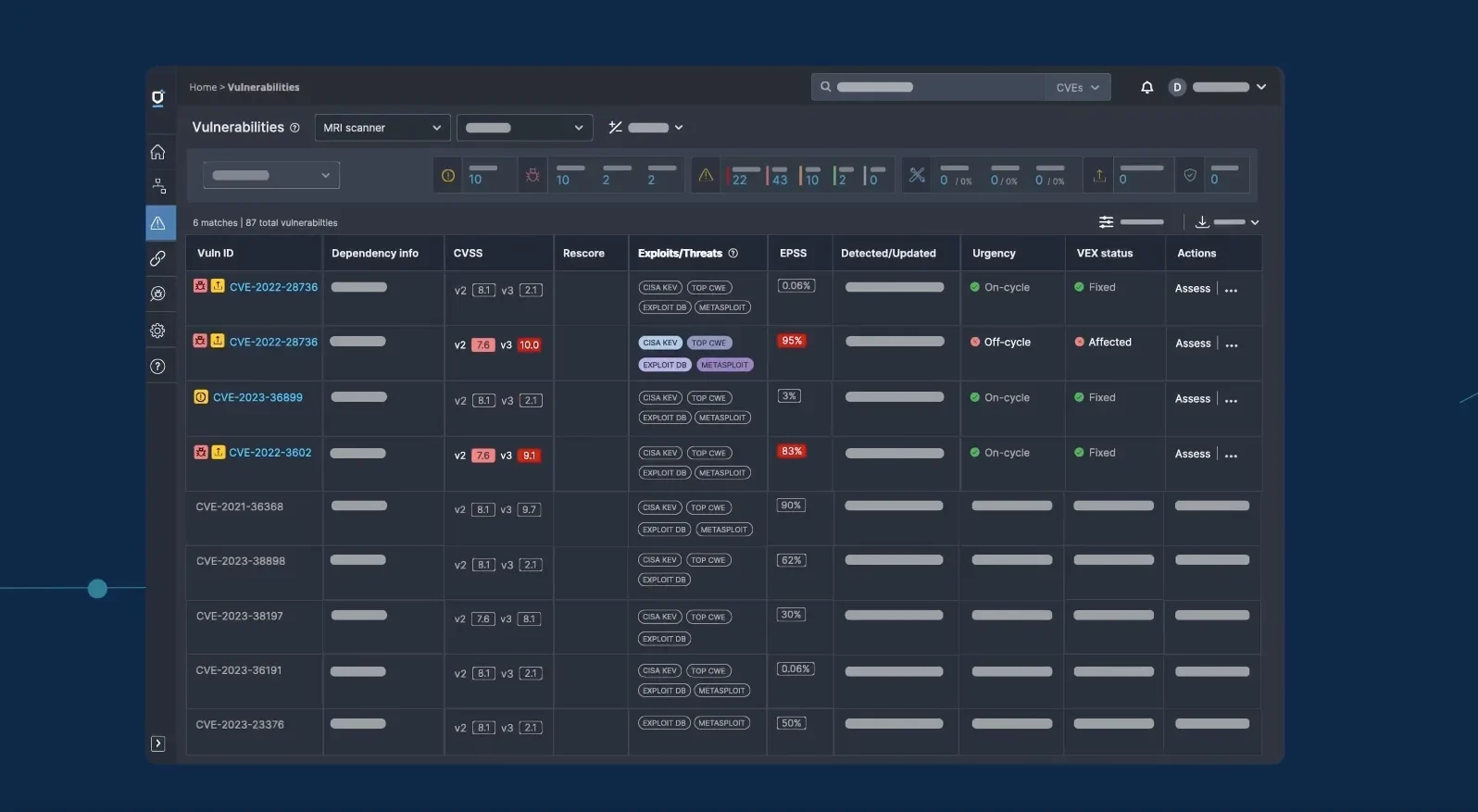
Blog · Tools & Processes
Introduction Helm, developed by Medcrypt, emerges as a robust and precise SBOM (Software Bill of Materials) and Vulnerability Management Tool tailored to identify potential…
Read article
Case study · FDA Cybersecurity Readiness
From Manual Bottleneck to Automated Intelligence
Read case study